Driving Action Plan (PTP)
Before and during every driving maneuver, follow the PTP sequence:
- P — Position (Kedudukan): Ensure your vehicle is in the correct lane and position for the intended maneuver. Check mirrors.
- T — Speed / Kelajuan (Tukar Kelajuan): Adjust your speed appropriately. Slow down for turns, speed up for merging.
- P — Gear / Pecutan (Pindah Gear): Select the appropriate gear for the speed and road conditions. Downshift before corners, upshift on straights.
The CITO Concept (Hazard Identification)
- C — Concentrate (Tumpukan Perhatian): Keep full attention on the road. No mobile phone use. No eating or drinking while driving. Stay alert.
- I — Identify (Kenal Pasti): Spot potential hazards early — other vehicles, pedestrians, road conditions, weather changes, unexpected obstacles.
- T — Think (Fikir): Assess the risk level and decide on the safest course of action. What could go wrong? What is the escape route?
- O — Organize (Susun Atur): Execute your plan — change speed, position, signal, or stop as needed.
Safe Following Distance (2-Second Rule)
- Maintain at least a 2-second gap behind the vehicle in front under normal conditions
- In wet conditions, increase to 4 seconds
- In heavy rain or fog, increase to 6 seconds or more
- How to measure: Pick a fixed point (lamp post, sign). When the vehicle ahead passes it, count "one thousand and one, one thousand and two." You should not reach the point before finishing.
- When following large vehicles (lorries, buses), increase the distance further as they block your view
Mirror Usage (MSM Routine)
- M — Mirror: Check your rearview and side mirrors
- S — Signal: Indicate your intention
- M — Maneuver: Carry out the action
- Check mirrors every 5 to 8 seconds during normal driving
- Always check mirrors before: changing lanes, turning, overtaking, slowing down, stopping
Signaling
- Signal early enough to give other road users time to react — at least 30 meters before turning
- Signal before changing lanes, not during
- Cancel your signal after completing the maneuver
- Check that your signal does not confuse other road users
Road Priority — Visual Examples
Study these junction scenarios to understand who has right of way:
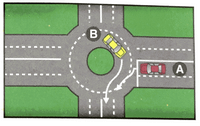 Roundabout Priority
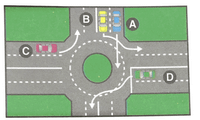 Roundabout Lanes
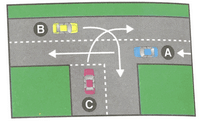 T-Junction Priority
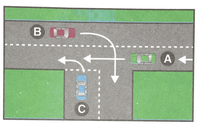 Junction Priority
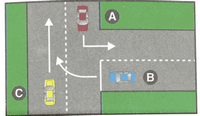 Right of Way
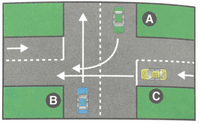 Intersection Rules
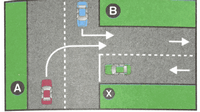 Turn Priority
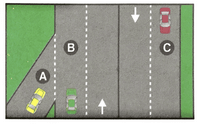 Lane Position
Key Signs for Safe Driving
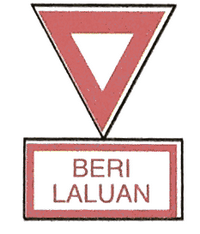 Give Way
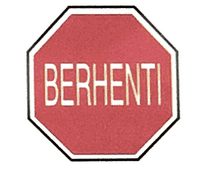 Stop
Stop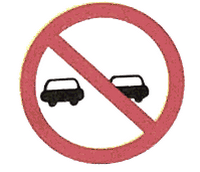 No Overtaking
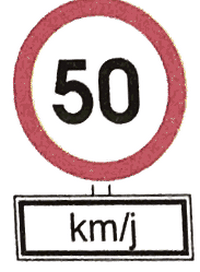 Speed Limit
Lane Discipline
- Stay in the left lane unless overtaking on multi-lane roads
- Return to the left lane after overtaking
- Do not straddle lane markings
- Use the correct lane for your intended direction at junctions
- On expressways, the right lane is for overtaking only
Ready to test yourself?
The KPP exam questions on this topic are waiting in the practice sections.