Driving in Rain
- Reduce speed — roads are most slippery in the first 10 minutes of rain due to oil and water mixing
- Increase following distance — braking distances can double or triple on wet roads
- Turn on headlights — even in daytime rain, use headlights so others can see you
- Turn on windshield wipers and demister/defroster
- Avoid sudden braking, sharp turns, or sudden acceleration
- Watch for hydroplaning — if the car feels like it is floating, ease off the accelerator gently
- Avoid driving through flooded areas — water can damage the engine and cause loss of control
- If visibility drops below 100 meters, use hazard lights
Related Signs
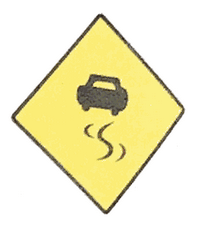 Slippery Road
 Road Hazards
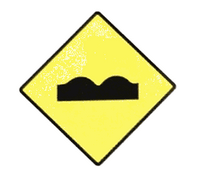 Uneven Road
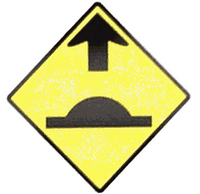 Speed Hump
Driving at Night
- Use headlights — mandatory from 7:00 PM to 7:00 AM
- Use low beam when following another vehicle or when oncoming traffic approaches to avoid blinding other drivers
- Use high beam on dark, unlit roads when no other vehicles are ahead or approaching
- Reduce speed — your visibility is limited to the range of your headlights
- Keep all windows and mirrors clean
- Watch for pedestrians, cyclists, and motorcyclists who may be hard to see
- If blinded by oncoming headlights, look toward the left edge of the road until the vehicle passes
Highway / Expressway Driving
- Use the acceleration lane to match highway speed before merging
- Maintain a safe following distance — at least 2 seconds, more at high speed
- Overtake on the right only
- Do not stop on the highway unless it is an emergency — use the emergency lane
- Watch for exit signs early and position yourself in the correct lane
- Do not reverse or make U-turns on the highway
Urban Driving
- Watch for pedestrians, especially near schools, markets, and bus stops
- Be alert for vehicles pulling out of parking spaces or side roads
- Follow traffic signals strictly
- Be prepared for frequent stops and slow-moving traffic
- Check blind spots when changing lanes in multi-lane urban roads
Hill Driving
- Uphill: Use lower gears to maintain power. Do not ride the clutch.
- Downhill: Use engine braking by selecting a lower gear. Do not ride the brakes continuously — they can overheat and fade.
- Hill Start: Use the handbrake to prevent rolling back. Release handbrake smoothly as you engage the clutch.
- Give way to vehicles going uphill when the road is narrow
Parking Techniques
- Parallel Parking: Signal, position alongside the car ahead, reverse into the space using the reference point method
- Perpendicular Parking: Signal, slow down, turn into the bay at low speed
- Slope Parking (uphill): Turn front wheels away from the curb. If no curb, turn wheels toward the edge.
- Slope Parking (downhill): Turn front wheels toward the curb. Always engage the handbrake and leave the car in gear (1st or Reverse).
Ready to test yourself?
The KPP exam questions on this topic are waiting in the practice sections.